
DriveZero tracks vehicle usage, calculates the CO₂ emissions behind every journey, and connects that footprint straight to certified carbon offsetting — so awareness turns into action inside one app.
We took the product from concept to the App Store: discovery, UI/UX, iOS development, API integration, QA and deployment.
Drivers may know how much fuel they use or how far they travel, but translating everyday driving activity into a clear understanding of its environmental impact is much less straightforward.
Companies have tools to monitor efficiency against climate goals. Personal emissions data is harder to reach and rarely comes with anything actionable attached. And while many people say they would pay to reduce their impact, traditional offsetting is inconvenient enough that few follow through.
DriveZero was created to close that gap: a simple mobile experience that connects everyday driving to clear carbon data, then gives users a way to act on it in the same place.
We approached DriveZero as an end-to-end product development project, taking the application from its initial requirements through design, development, testing and deployment.
Product vision, sustainability goals, target users and the core experience needed to turn driving into insight.
Trips, distance, emissions and trends presented in a clear format instead of a wall of metrics.
Location-based tracking, vehicle data, emissions calculation and reporting as one connected experience.
Particular attention to background location behaviour, since trips record while the app is closed.
Shipped to the App Store, then maintained across fourteen releases since launch.
Simply tracking where a user travels does not provide meaningful sustainability insights.
We structured the experience around automatically capturing trip information and converting it into useful emission metrics — moving users from knowing how far they drove to understanding what it cost.
For emission tracking to be useful, users should not have to manually start and stop every journey.
Location-based trip tracking sits in the core of the app, recording journeys even when it is not open — cutting manual interaction to almost nothing.
A CO₂ number on its own does not help anyone understand their habits or spot a way to improve them.
We organised the experience around weekly, monthly and yearly reporting, so users can look past a single trip and see their broader footprint over time.
Tracking emissions is only one part of creating meaningful environmental change.
Certified offsets are purchasable in a few taps, tied directly to the driving that caused the emissions — completing the journey from tracking to understanding to action.
Vehicle usage translated into live emissions for every journey.
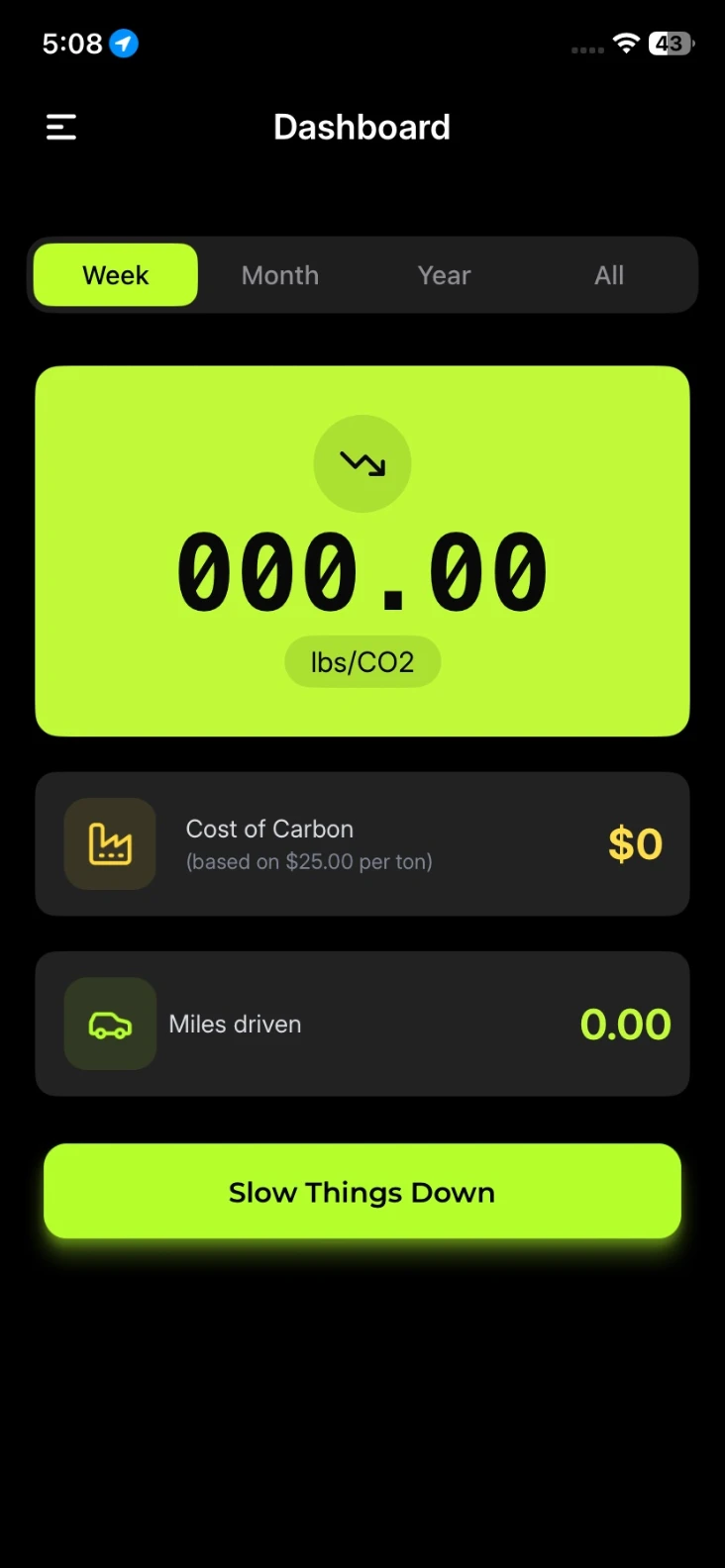
Routes and distances recorded without the user pressing anything.
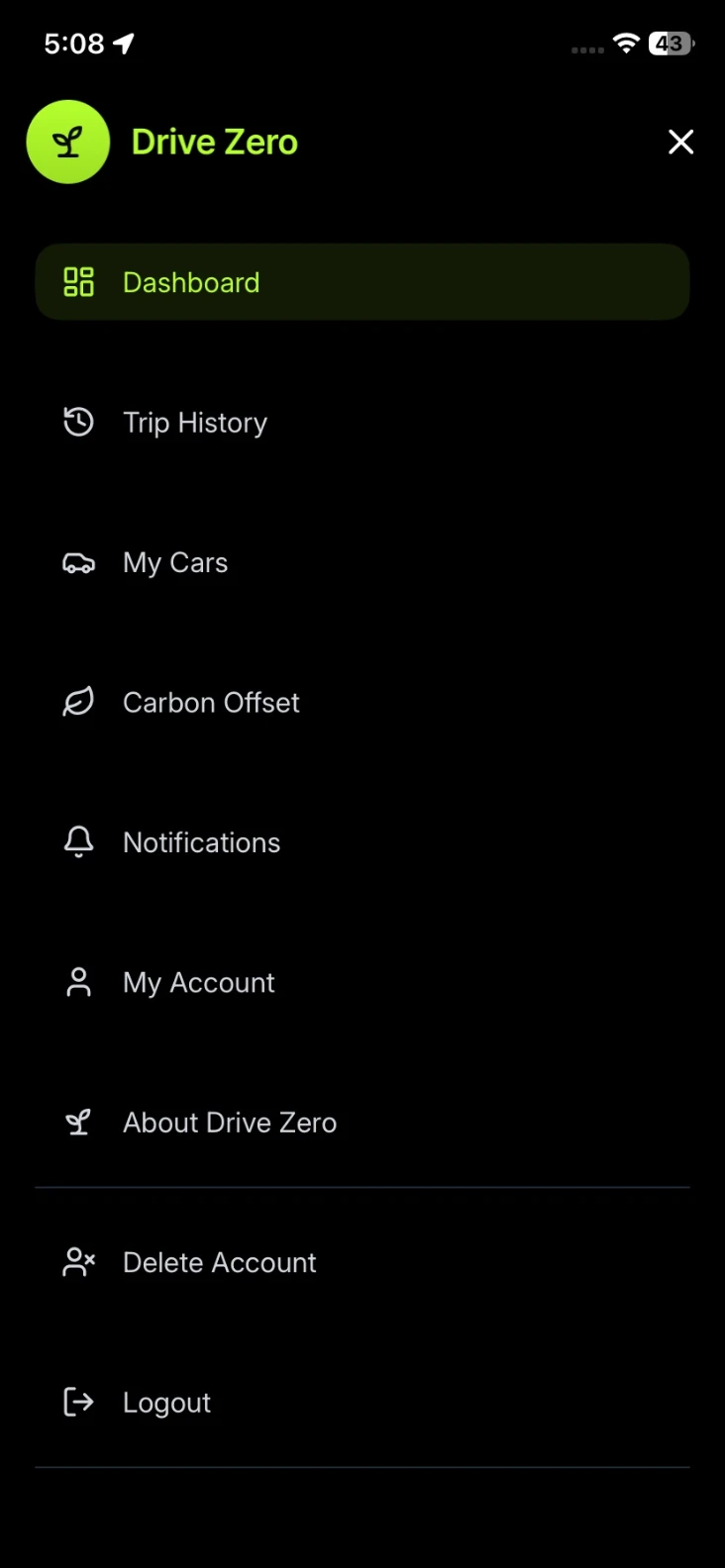
Patterns over time, not one number in isolation.

Tips to reduce impact, and certified offsets tied to the driving that caused it.
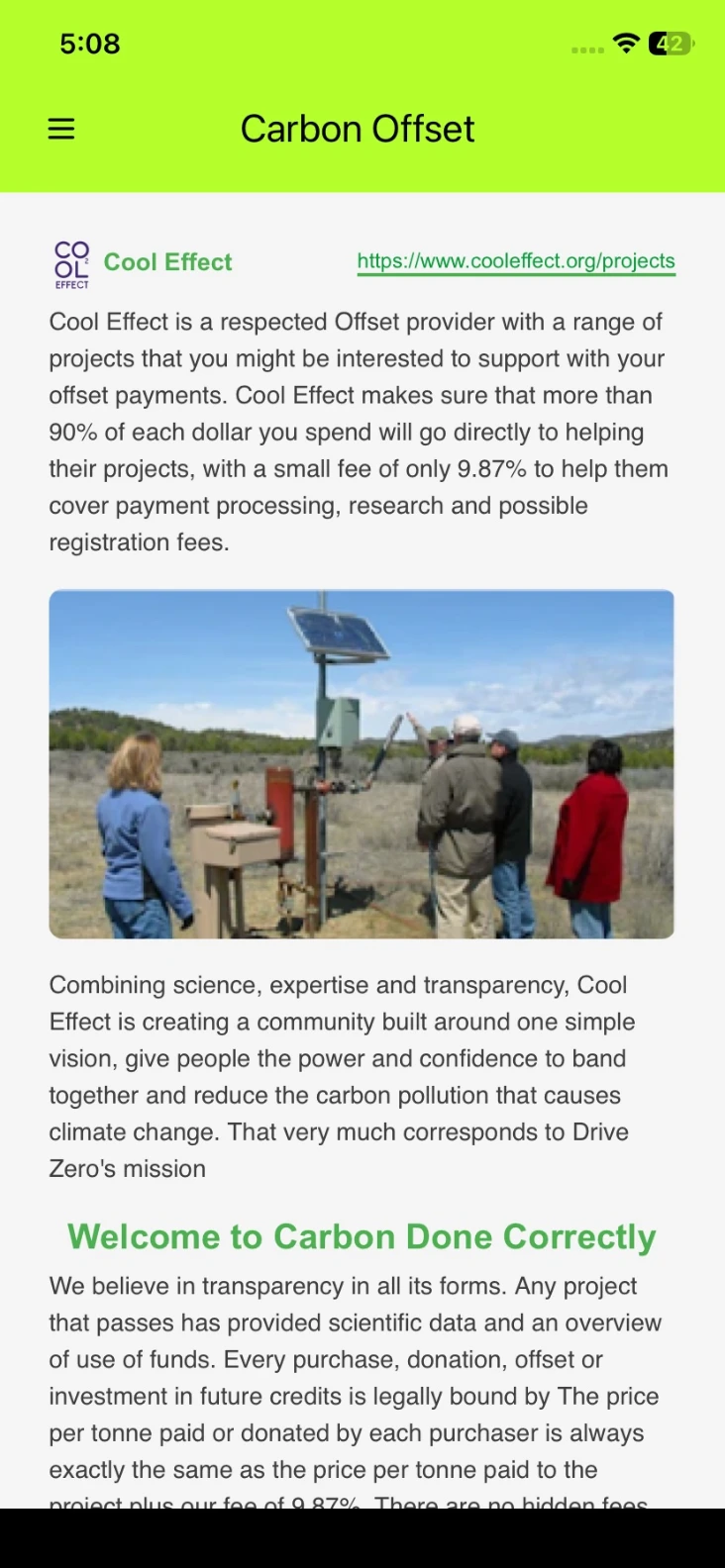
The app records trips, distance and route information from GPS and location data, and can continue tracking while running in the background so journeys are captured automatically.
Journey and vehicle data becomes per-trip and cumulative emissions figures. The detection formula is refined continuously to improve accuracy over time.
Built for iPhone with Wallet support and in-app subscriptions, and maintained through fourteen App Store releases since the first version shipped.
As the development partner, we were involved throughout the product lifecycle — from the first requirement conversation to a live listing on the App Store.
Instead of asking users to calculate their transportation footprint, DriveZero tracks trips automatically, measures the CO₂ behind them, reports the trend over time, and sells the offset in the same place.
Our end-to-end involvement turned the initial product vision into a live mobile application built around one clear objective: helping individuals drive more consciously and take meaningful action toward a lower-carbon future.
Have a product to build or rescue?
NDA before any discussion · Fixed-price estimate in 24 hours